A psychological crime thriller where the most dangerous enemy lives within
ABOUT
CAMOUFLAGE STORY — CAMOUFLAGE STORY — CAMOUFLAGE STORY — CAMOUFLAGE STORY — CAMOUFLAGE STORY — CAMOUFLAGE STORY — CAMOUFLAGE STORY — CAMOUFLAGE STORY — CAMOUFLAGE STORY — CAMOUFLAGE STORY — CAMOUFLAGE STORY — CAMOUFLAGE STORY — CAMOUFLAGE STORY — CAMOUFLAGE STORY — CAMOUFLAGE STORY — CAMOUFLAGE STORY — CAMOUFLAGE STORY — CAMOUFLAGE STORY — CAMOUFLAGE STORY — CAMOUFLAGE STORY
CAMOUFLAGE THE FILM
Story & World
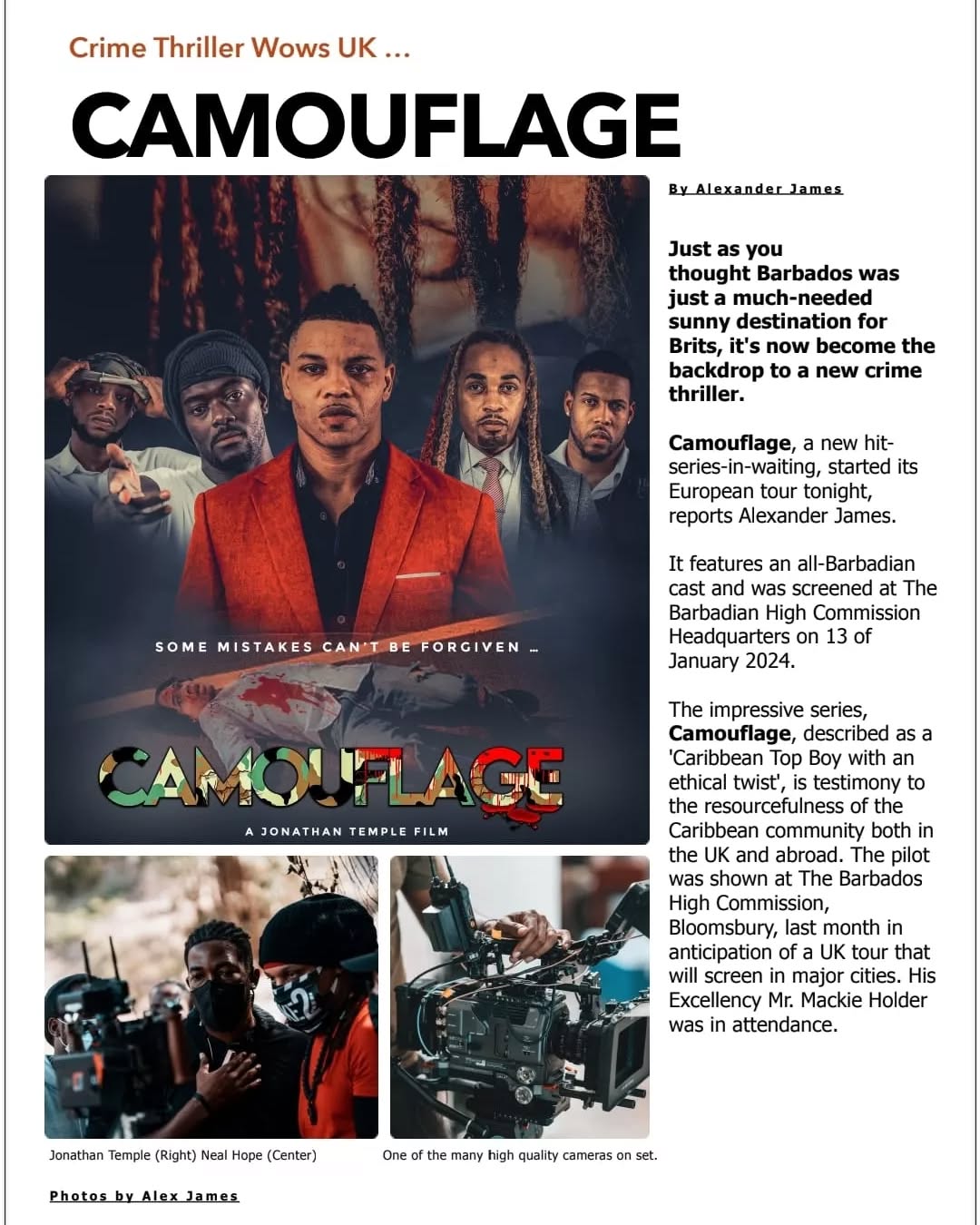
CAMOUFLAGE is set in contemporary Barbados, a place often seen through the lens of paradise but rarely explored in its full complexity. Beneath the island’s sunlit beaches, luxury homes, and vibrant cultural life exists another reality—one shaped by hidden power structures, quiet desperation, and systems that do not always serve those they are meant to protect.
When a seemingly random act of violence tears through the life of a well-connected father, the pursuit of answers draws him and his brother into this concealed world. Their journey moves fluidly between starkly different spaces: polished villas and tense neighborhood streets, festive gatherings and shadowed back rooms, public institutions and private criminal networks. Each location reflects a society balanced between order and collapse, where appearances often conceal deeper truths.
As the brothers push deeper into the island’s underworld, the boundaries between respectability and criminality begin to blur. The film reveals a world where loyalty is transactional, authority is compromised, and survival depends on knowing when to hide and when to strike. In this environment, the past is never truly buried—it waits beneath the surface, ready to resurface when the illusion of peace is shattered.

CAMOUFLAGE THE FILM
The Inspiration Behind Camouflage
Camouflage is born from a deeply personal collision between the silent, interior wars of the body and the sudden, explosive wars of the street.
1. The Silent Health Crisis: An Invisible Enemy The film’s emotional core is drawn from the writer’s intimate experience with the insidious nature of health battles, particularly cancer, which claimed the life of Remere’s wife, Racial. This is not a metaphorical device, but an echo of real loss. Like an undiagnosed illness, the threats in Camouflage often fester unseen: corruption metastasizing within institutions, past trauma lying dormant within a man, and hidden agendas moving beneath the surface of a random crime.
The attack on Hendy is the “catastrophic diagnosis”, the moment a hidden, volatile condition erupts with life-altering force. This parallel reframes the crime thriller: the search for the assailants is also a desperate search for the source of the “sickness” that has invaded the family’s world, mirroring the frantic search for a cure or a cause in the face of a medical tragedy.
2. The Human Response: When the Facade Cracks The narrative is fundamentally a study in crisis response. It asks: What happens when the carefully managed performance of a peaceful life is shattered by an event that exposes our fragility? Remere’s Journey mirrors the stages of grappling with a sudden, life-altering diagnosis: denial (it can’t be targeted), anger (the fury at the assailants and the broken system), bargaining (if I do X, my son will be safe/healthy), and the ultimate confrontation with a brutal choice about treatment (do I use the old, violent “medicine” I know, or try a new, untested path?). The story explores how crisis distills a person to their essence. Just as a health scare strips away life’s trivialities to reveal what truly matters, the attack on Hendy strips away Remere’s civilized veneer, forcing a confrontation with his core identity: protector or pacifist? Father or fighter?
3. The Intertwining of Two Battlegrounds The genius of the inspiration is in its parallel structure: The Body vs. The Family: Racial was lost to an internal, biological enemy (cancer). Hendy is threatened by an external, societal enemy (violence). Remere is a man who has already fought a war he couldn’t win with his fists (against disease) and must now decide whether to fight a new war with a tool he swore to discard (his violence). The Unseen vs. The Seen: Cancer operates in secret, its damage done before it’s seen. The corruption in the film operates similarly, hidden, systemic, its violence (the attack) is merely a visible symptom of a deeper disease. In essence, Camouflage uses the grammar of a crime thriller to articulate the psychology of a health crisis. The pacing, the slow burn of investigation, the sudden jolts of violence, the creeping dread, mirrors the experience of navigating a serious illness. The enemy is both everywhere and nowhere; the solution is uncertain; and the cost of every decision is measured in the currency of a loved one’s life. This inspiration makes Camouflage more than a genre piece. It is a visceral metaphor for survival, asking the same urgent question on two levels: When the world (or the body) turns against you, what are you willing to become in order to save what you love? The answer, the film suggests, is never clean, and the scars of the battle, whether against cells or criminals, reshape us forever.

The attack on Hendy is the “catastrophic diagnosis”, the moment a hidden, volatile condition erupts with life-altering force. This parallel reframes the crime thriller: the search for the assailants is also a desperate search for the source of the “sickness” that has invaded the family’s world, mirroring the frantic search for a cure or a cause in the face of a medical tragedy.
2. The Human Response: When the Facade Cracks The narrative is fundamentally a study in crisis response. It asks: What happens when the carefully managed performance of a peaceful life is shattered by an event that exposes our fragility? Remere’s Journey mirrors the stages of grappling with a sudden, life-altering diagnosis: denial (it can’t be targeted), anger (the fury at the assailants and the broken system), bargaining (if I do X, my son will be safe/healthy), and the ultimate confrontation with a brutal choice about treatment (do I use the old, violent “medicine” I know, or try a new, untested path?). The story explores how crisis distills a person to their essence. Just as a health scare strips away life’s trivialities to reveal what truly matters, the attack on Hendy strips away Remere’s civilized veneer, forcing a confrontation with his core identity: protector or pacifist? Father or fighter?
3. The Intertwining of Two Battlegrounds The genius of the inspiration is in its parallel structure: The Body vs. The Family: Racial was lost to an internal, biological enemy (cancer). Hendy is threatened by an external, societal enemy (violence). Remere is a man who has already fought a war he couldn’t win with his fists (against disease) and must now decide whether to fight a new war with a tool he swore to discard (his violence). The Unseen vs. The Seen: Cancer operates in secret, its damage done before it’s seen. The corruption in the film operates similarly, hidden, systemic, its violence (the attack) is merely a visible symptom of a deeper disease. In essence, Camouflage uses the grammar of a crime thriller to articulate the psychology of a health crisis. The pacing, the slow burn of investigation, the sudden jolts of violence, the creeping dread, mirrors the experience of navigating a serious illness. The enemy is both everywhere and nowhere; the solution is uncertain; and the cost of every decision is measured in the currency of a loved one’s life. This inspiration makes Camouflage more than a genre piece. It is a visceral metaphor for survival, asking the same urgent question on two levels: When the world (or the body) turns against you, what are you willing to become in order to save what you love? The answer, the film suggests, is never clean, and the scars of the battle, whether against cells or criminals, reshape us forever.

CAMOUFLAGE THE FILM
The company
Take 2 Media Films Inc
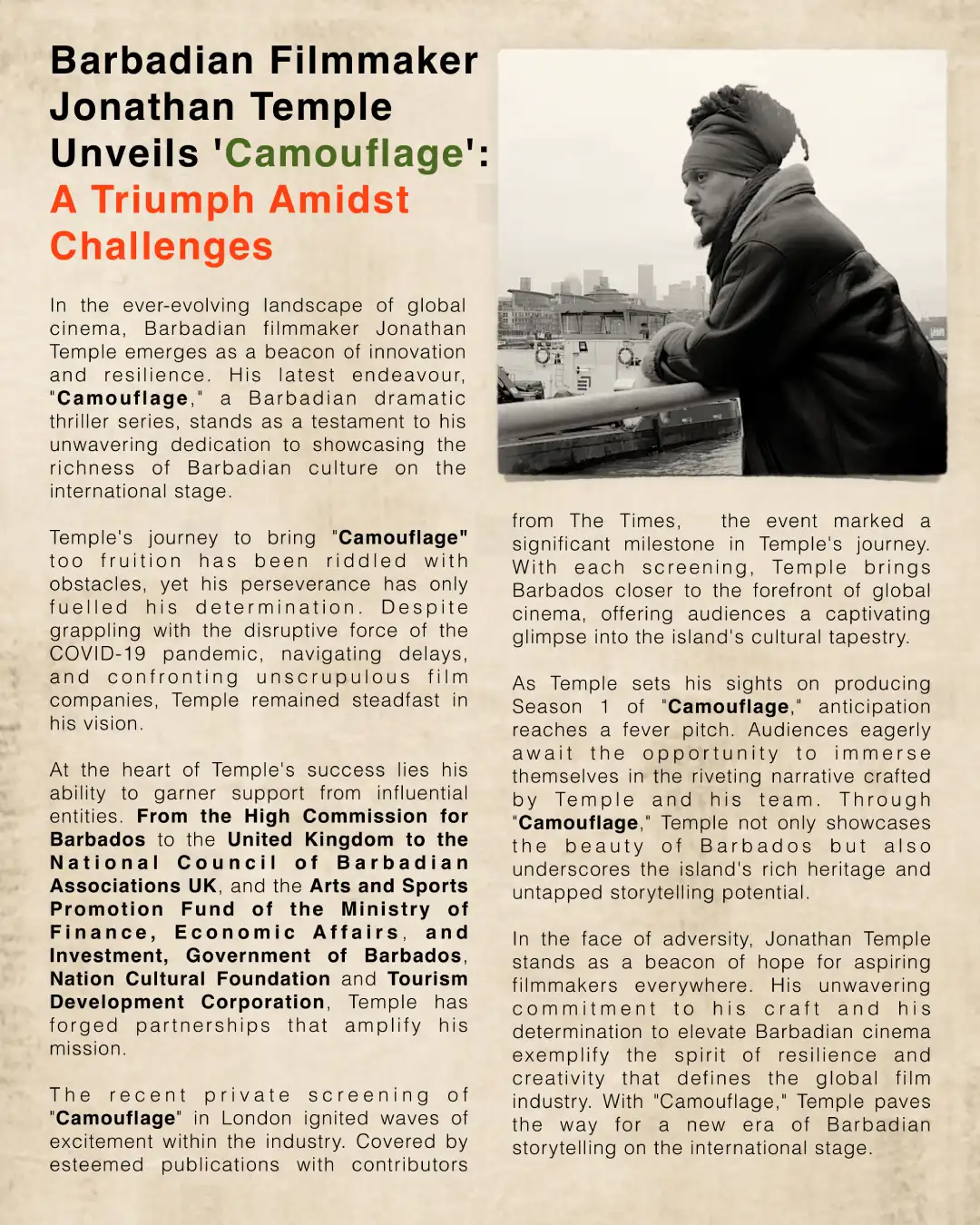
Take 2 Media Films Inc. is an independent, Barbados-based production company founded on the conviction that the Caribbean possesses some of the world’s most urgent, compelling, and cinematic stories. We exist to bring these narratives to global screens, not as exotic backdrops, but as authentic, complex worlds where universal human dramas unfold.
Our mission is twofold: to produce high-impact, commercially viable feature films and series that originate from and resonate within the Caribbean, and to strategically position Barbados as a sustainable, professional hub for regional and international film production. We believe in cinema as both cultural artifact and economic catalyst.
Our flagship project, Camouflage (in development, 2026), embodies this vision. It is a gritty, socially engaged crime thriller that is authentically Bajan in its soul yet international in its scope, featuring co-production partnerships with Canadian and UK entities and structured training collaborations between the University of the West Indies and Capilano University.
We operate at the intersection of artistic ambition, cultural integrity, and industry pragmatism. Our model prioritizes local talent development, cross-border collaboration, and narratives that challenge stereotypes while delivering gripping entertainment. Take 2 Media Films is not just making movies, we are building an ecosystem, one frame at a time.
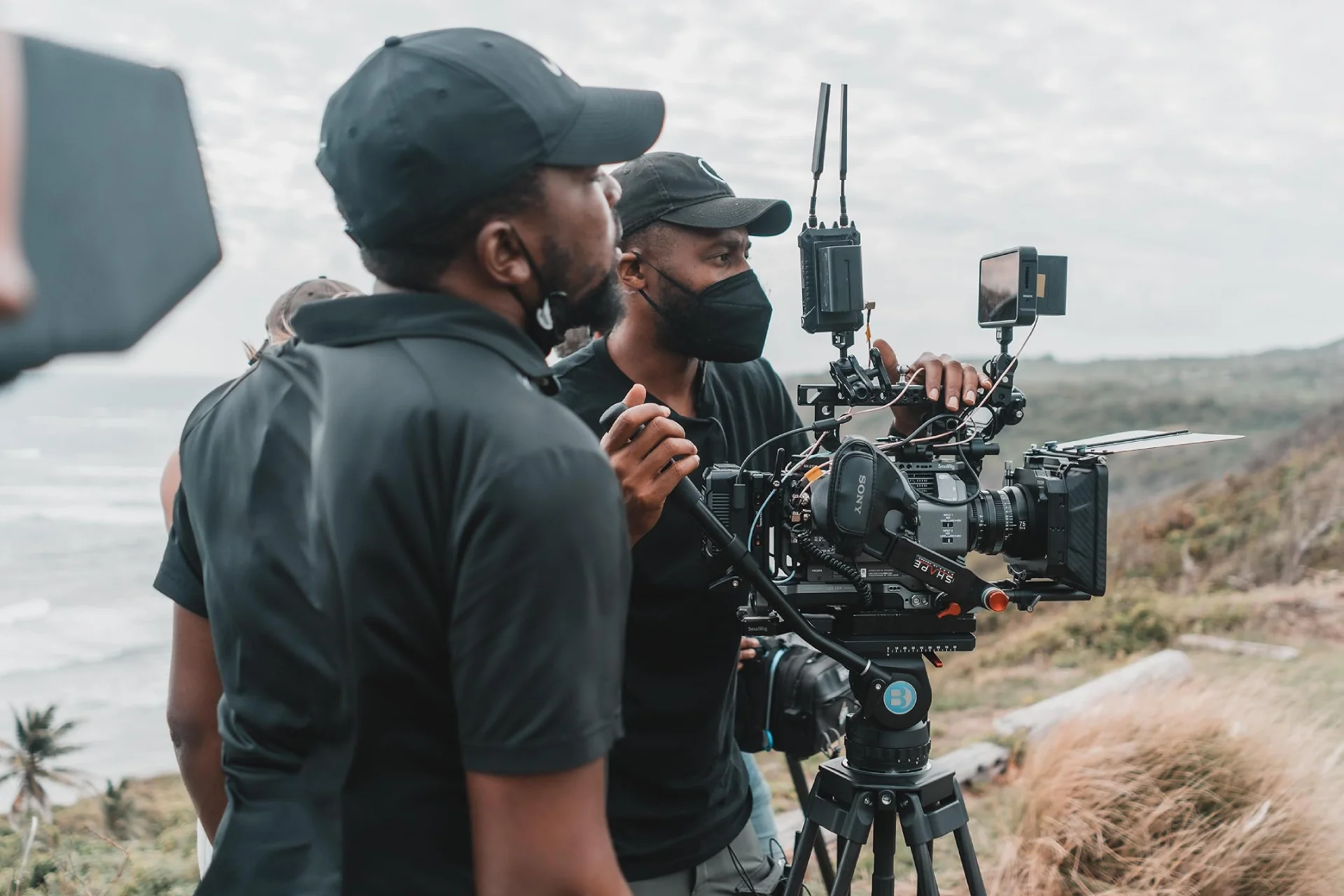
BEHIND THE CAMERA
Biography
CAMOUFLAGE THE FILM
MEDIA
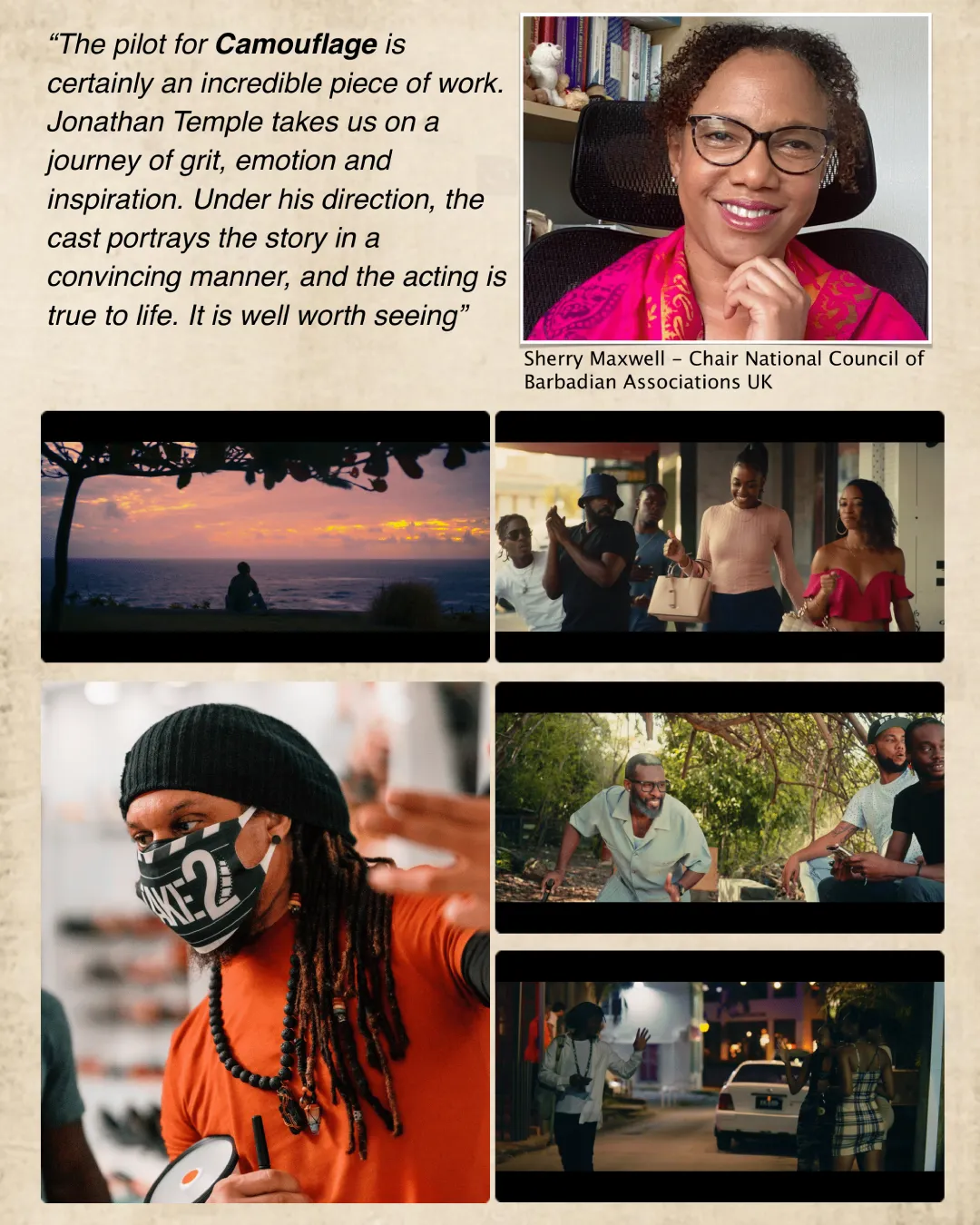
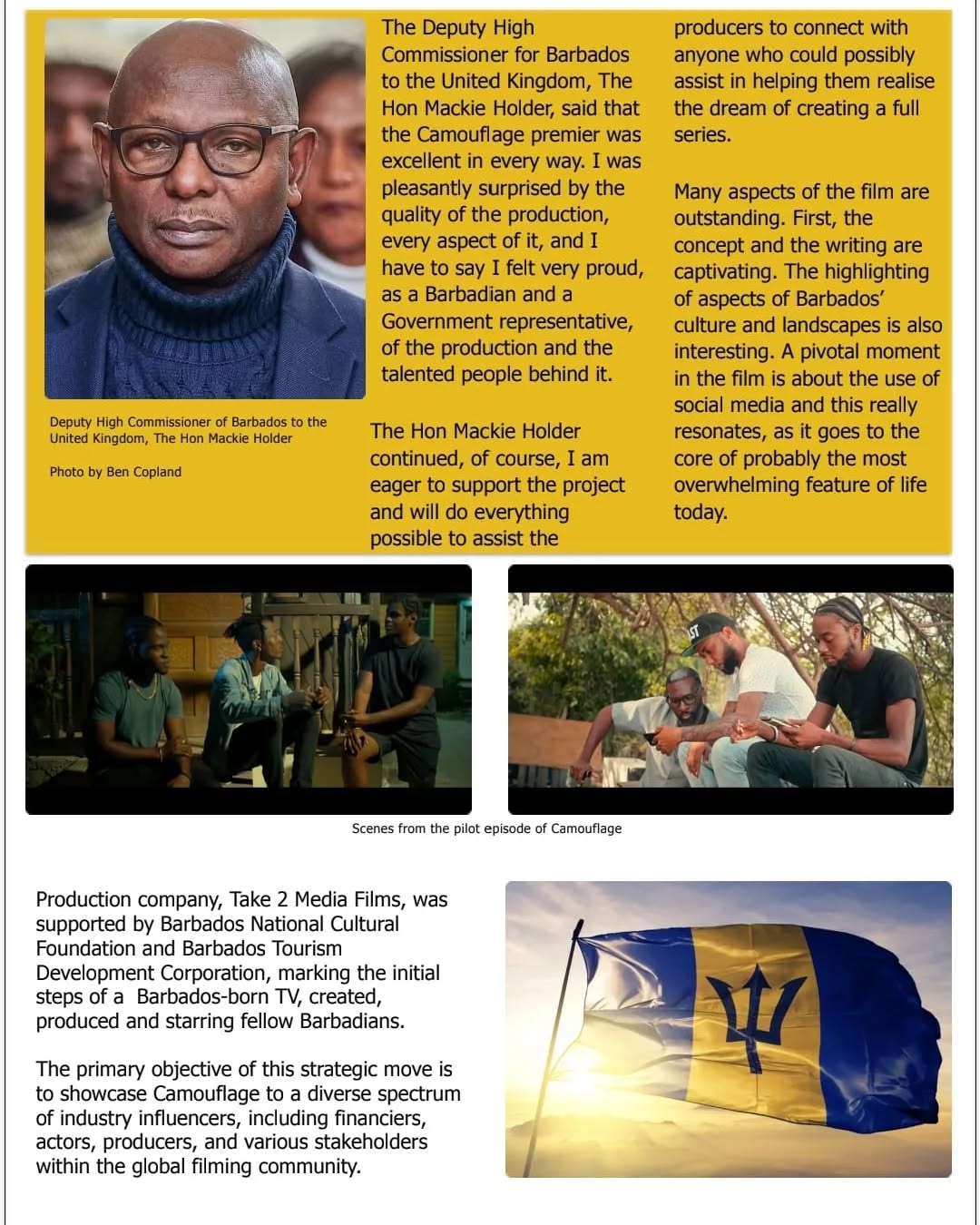
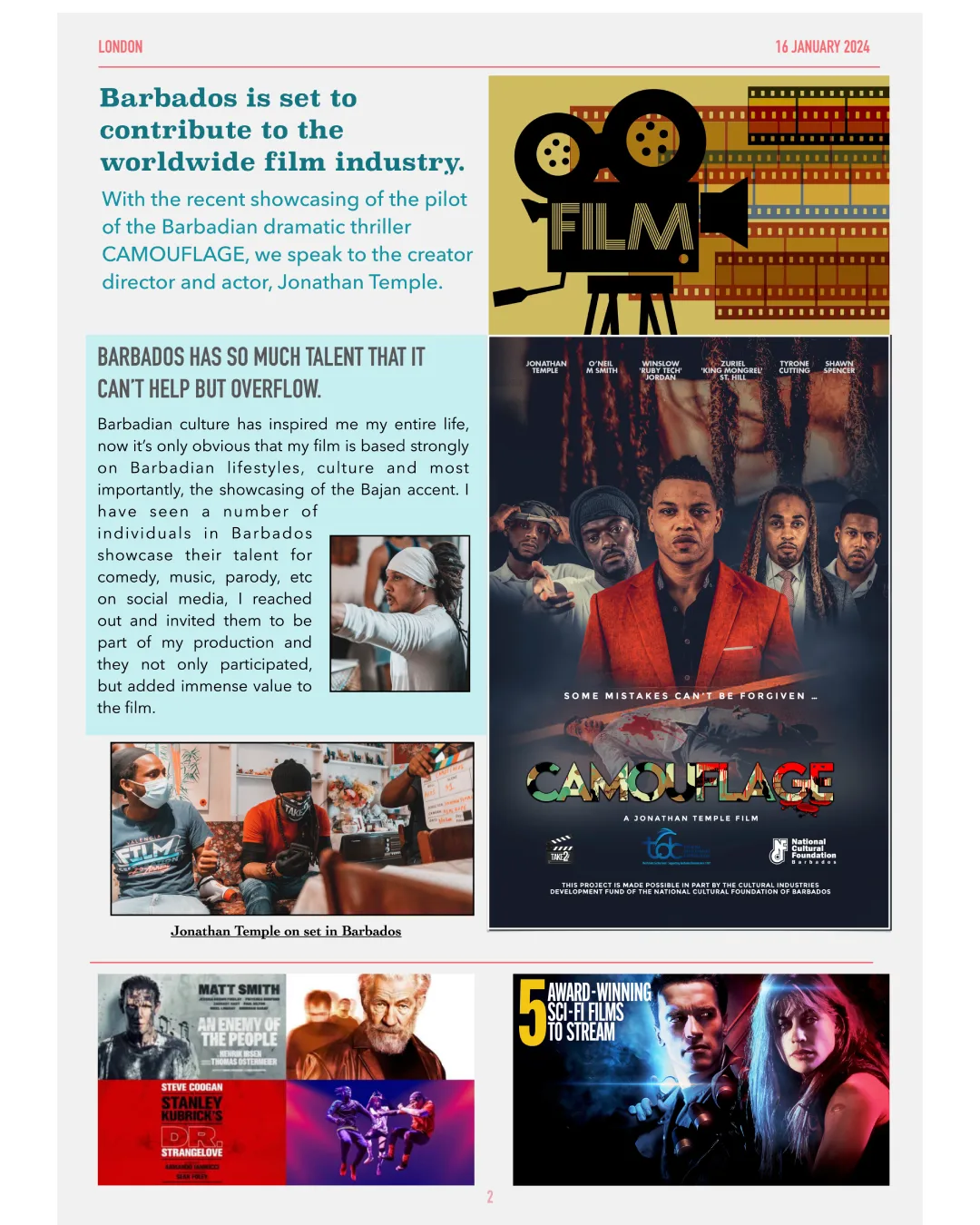
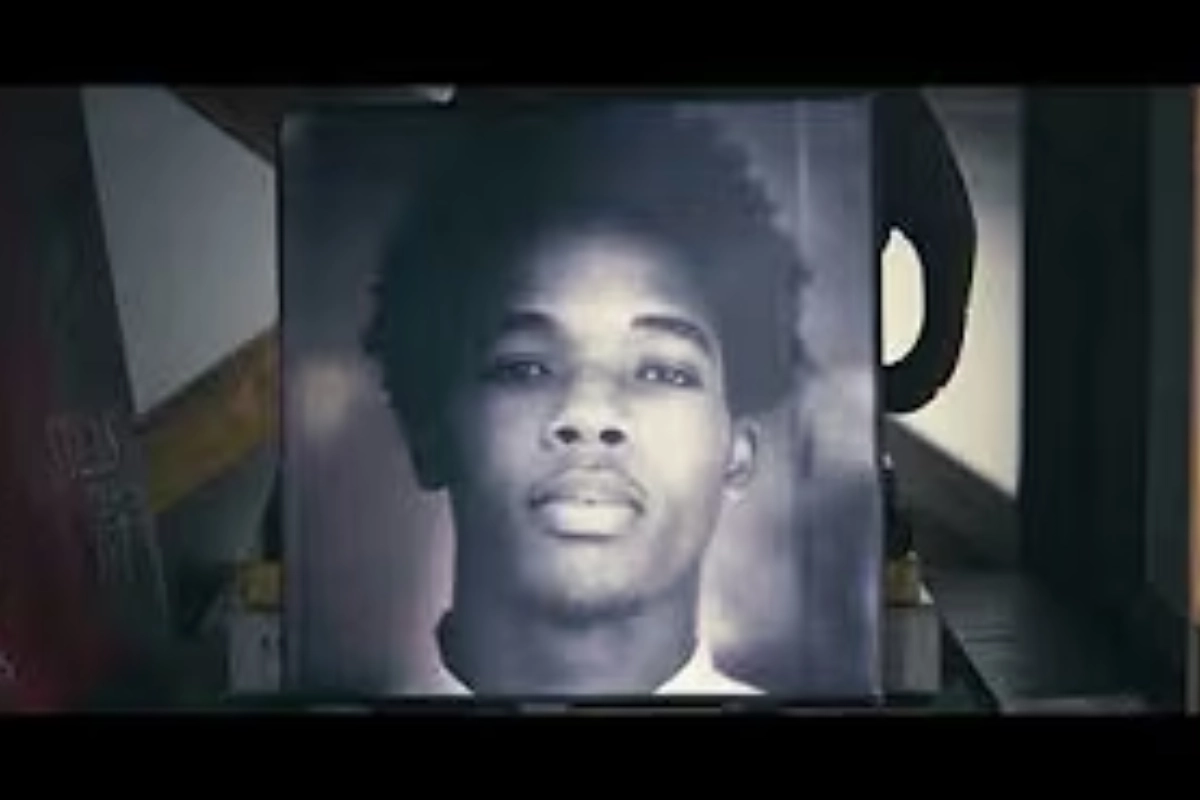
Official trailers, exclusive footage, and visual moments from CAMOUFLAGE.







BEHIND THE CAMERA
THEMES & MEANING
Camouflage is more than a film, it is a testament to resilience and community.
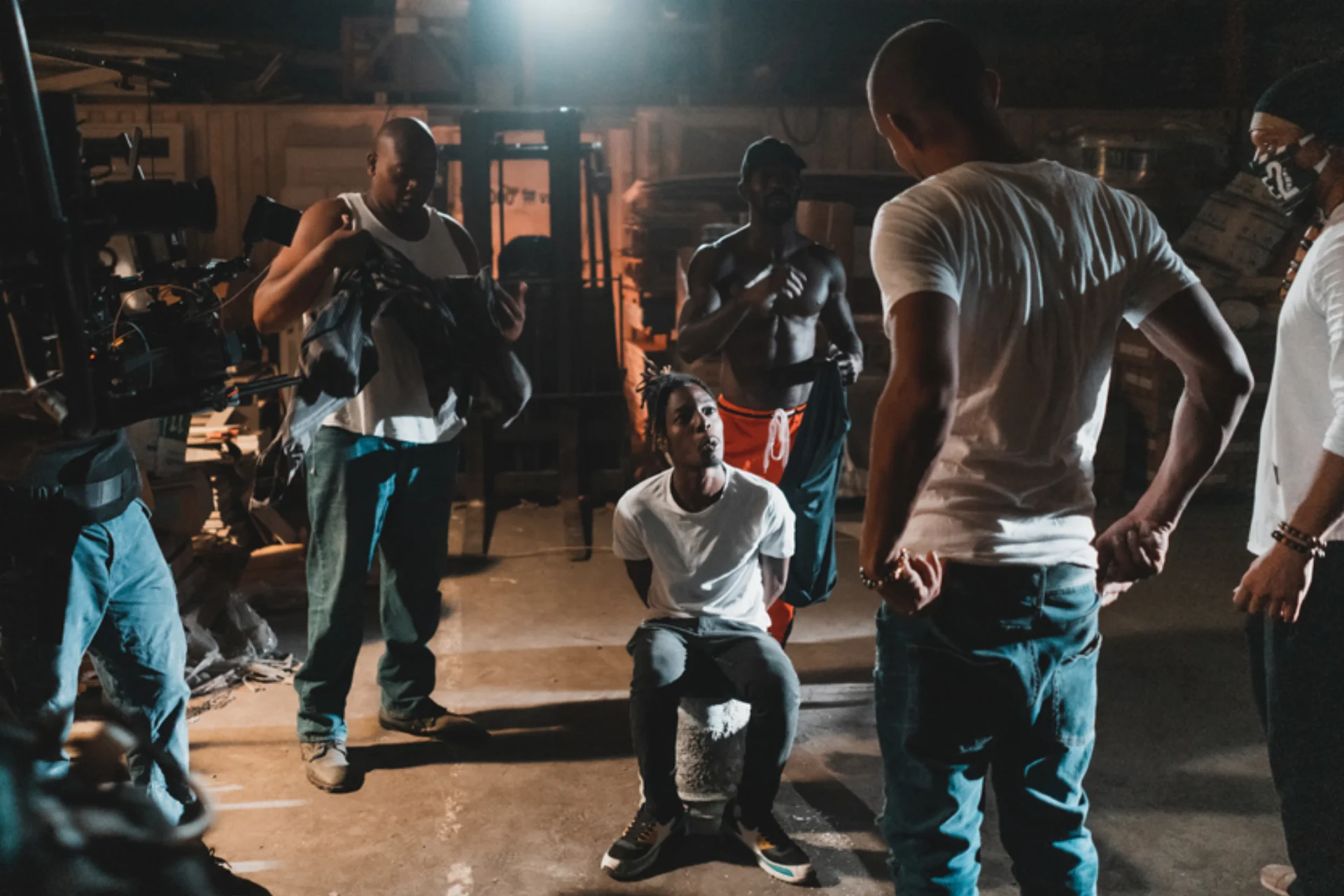
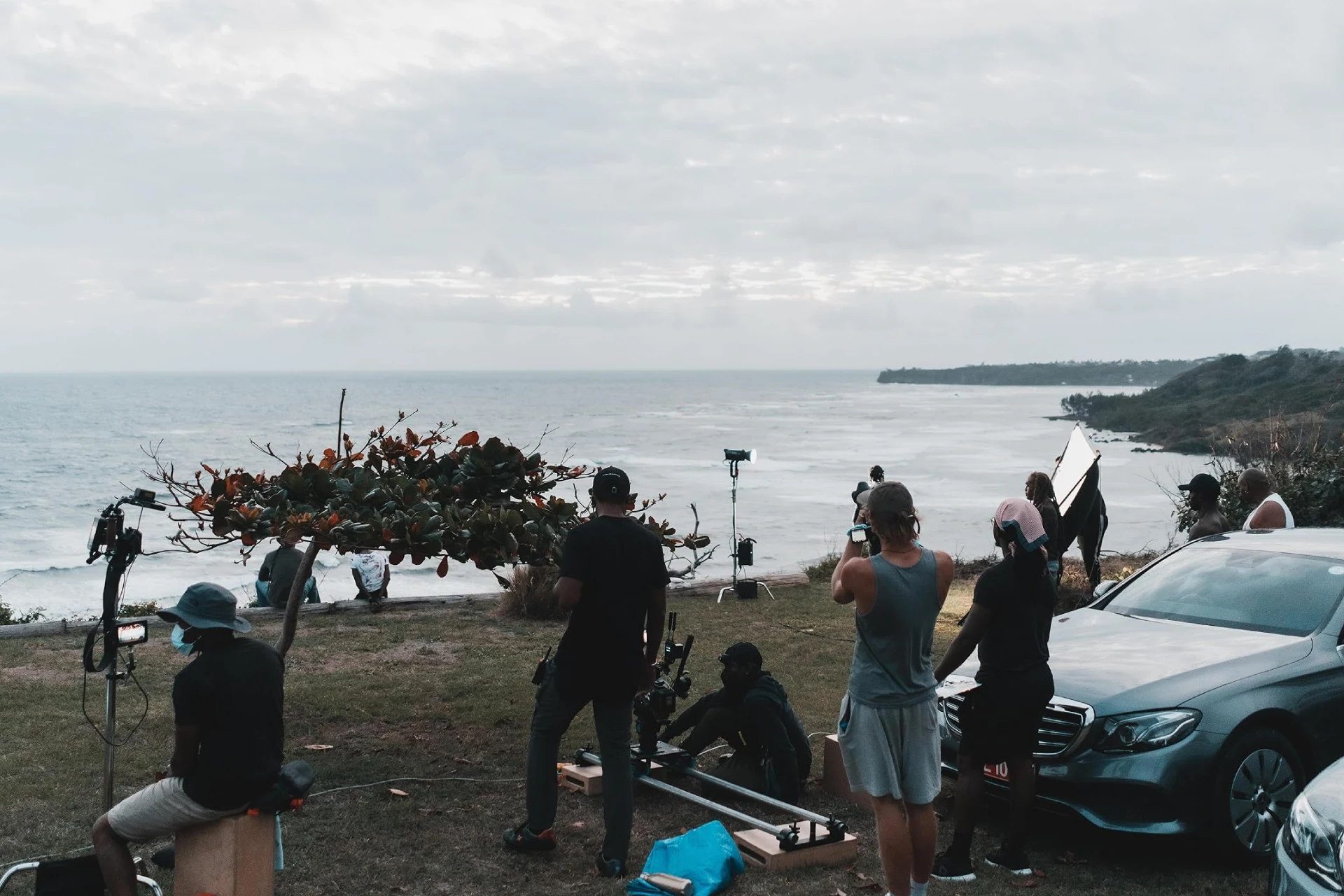
At its core, CAMOUFLAGE is a story about identity, redemption, and the masks people wear to survive. The film explores the fragile nature of peace and asks whether redemption can endure when tested by violence. Through Remere’s journey, the story examines the tension between a man’s past and the life he has chosen to build, revealing how easily buried instincts can resurface when family is threatened.
Set against a world where institutions meant to protect are compromised, the film questions the nature of justice itself. When the system is broken, CAMOUFLAGE asks whether true justice can exist without becoming revenge, and what moral cost is paid when personal retribution replaces lawful order. Family, legacy, and survival collide as each choice made in the name of protection risks passing unresolved conflict from one generation to the next.
Ultimately, CAMOUFLAGE presents peace not as a permanent state, but as a daily struggle — a conscious performance that can be torn away in moments of crisis. The film argues that identity is not defined by who we are in calm, but by who we choose to become when the illusion of safety is shattered.
Contact — Contact — Contact — Contact — Contact — Contact — Contact — Contact — Contact — Contact — Contact — Contact — Contact — Contact — Contact — Contact — Contact — Contact — Contact — Contact
SUPPORT OUR PROJECT
Support the project and help bring the vision of CAMOUFLAGE to the screen

An independent Caribbean production company bringing authentic stories to a global audience.
NAVIGATION
Home
ABOUT
media
CAST & CREW
CONTACT
FOLLOW US
Camouflage Barbados
take2mediafilms.inc
camouflagebarbados
camouflagebarbados
Camouflage Barbados
For partnership
take2mediabb@gmail.com
© Take 2 Media Films Inc. All Rights Reserved | Made by Imad EL